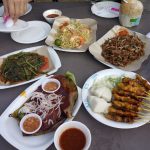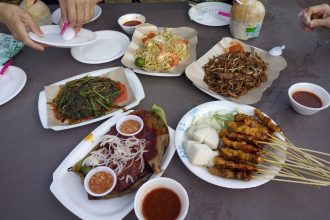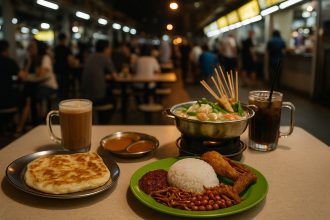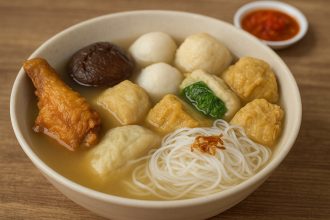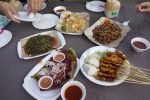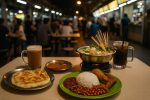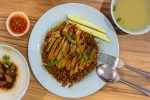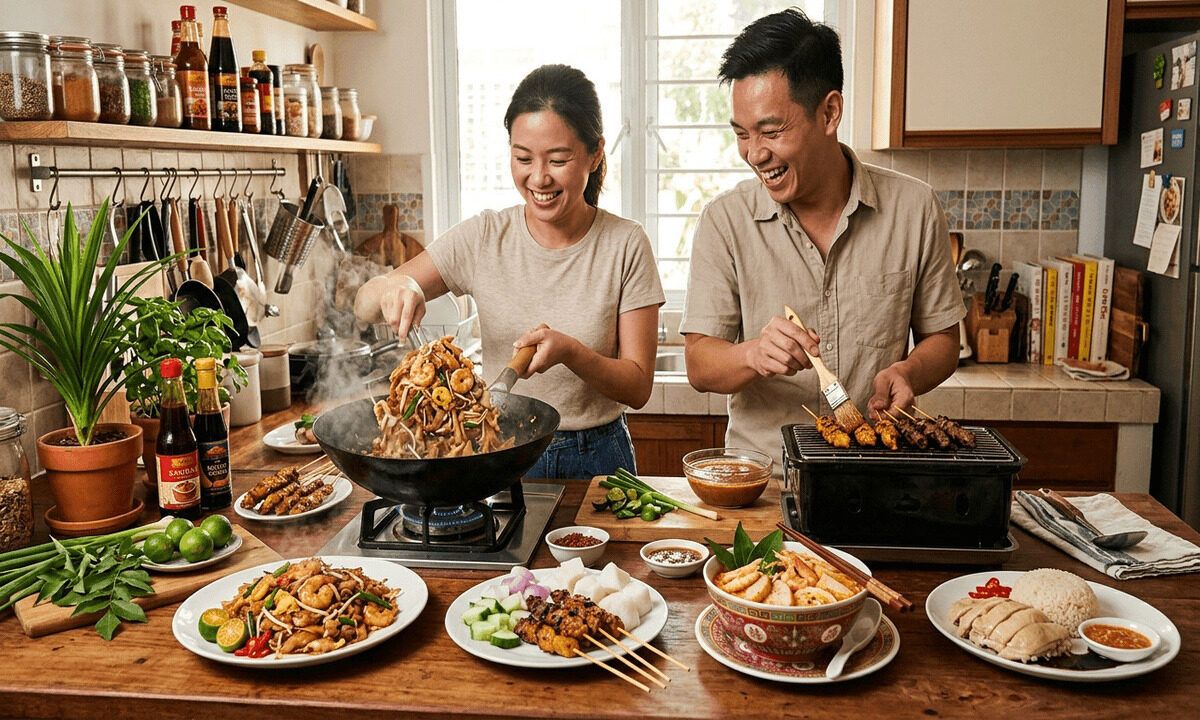
There is something about a hawker centre that no restaurant can fully replicate. The heat of the wok, the smoky char in the air, the plastic stools and the uncle who has been flipping the same dish since 1987. But here is the thing: that passion you feel walking through a hawker centre does not have to stay there. A Saturday morning, a good market haul, and a bit of patience can bring those flavours right into your kitchen. Not every dish is weekend-worthy. Some are. These are the ones that genuinely pay off.
Your Weekend Hawker Kitchen at a Glance
- Dishes like char kway teow, claypot rice, and satay reward time and prep
- A good wok and high heat are your two best friends
- Grilling dishes like satay and BBQ stingray are great for weekend gatherings
- One-pot dishes do all the heavy lifting with minimal cleanup
- Sourcing the right ingredients makes or breaks the final result
Why These Dishes Deserve a Full Weekend Day
Singapore street food is fast to eat but not always fast to make. The best hawker dishes carry decades of refinement. A plate of char kway teow that costs $4 at a stall may have taken the cook forty years to perfect. At home, you are compressing that learning into a few hours of prep and cooking. That is not a bad deal.
The weekend gives you the breathing room to do it properly. You can toast your dried shrimp. You can marinate your meat overnight. You can render the lard if you want to go all in. Weekday cooking asks for shortcuts. Weekend cooking asks for nothing but your full attention, and these dishes deserve exactly that.
If you are deciding where to start, browsing a solid catalogue of main dish recipes can help you zero in on a dish that matches your skill level and whatever is in season at the wet market this weekend.
Char Kway Teow: The Dish That Tests Your Wok
Char kway teow is probably the most intimidating dish on this list. It is also one of the most satisfying to nail at home. The secret is wok hei, that elusive smoky breath that comes from cooking over extremely high heat. A domestic stove will always run cooler than a hawker centre flame, but you can compensate.
How to Get Closer to That Hawker Flavour
- Use a well-seasoned carbon steel wok, not a non-stick pan.
- Heat the wok until it smokes before adding oil.
- Cook in small batches. Crowding the pan kills the heat.
- Work fast. Char kway teow takes under three minutes per serving.
- Use fresh flat rice noodles from the market, not the dried ones in packets.
The flavour base comes from dark soy sauce, fish sauce, and a splash of sweet sauce. Cockles are traditional and worth seeking out. Chinese sausage adds a hint of sweetness. Bean sprouts go in last so they stay crunchy.
This is a dish you will want to cook one portion at a time. Yes, it is extra effort. But that is exactly how it is done at the stall, and the result shows.
Chicken Rice: A Study in Restraint
Hainanese chicken rice looks simple. That is the trap. Every element, the rice, the broth, the chilli sauce, the ginger paste, needs to be correct. None of it is particularly difficult. All of it requires attention.
The chicken is poached at a low simmer, not a rolling boil. This keeps the flesh silky and the skin intact. The rice is then cooked in that same poaching broth with pandan leaves and bruised ginger. The broth becomes the soup. The fat skimmed off the broth goes into frying the raw rice before it is cooked. Nothing is wasted.
The Three Sauces You Cannot Skip
- Chilli sauce: Fresh red chillies, garlic, ginger, lime juice, and a splash of the poaching broth blended until smooth.
- Ginger paste: Grated young ginger mixed with sesame oil and a pinch of salt.
- Dark soy: Just a drizzle of aged dark soy is enough. Do not overthink it.
The dish teaches you that restraint is a skill. When every component is clean and precisely made, you do not need anything else.
Satay and BBQ Stingray: The Weekend Grill Sessions
Satay is made for weekends because the prep starts the night before. The marinade needs time to do its work. Turmeric, lemongrass, galangal, coriander seeds, and cumin go into a paste that coats the meat completely. Chicken thigh, mutton, and pork belly all work. Skewer them, refrigerate overnight, and grill the next afternoon.
The peanut sauce is the second act. Toast raw peanuts, grind them coarsely, then simmer with a rempah base made from dried chillies, shallots, lemongrass, and galangal. Tamarind juice and palm sugar balance the heat. This sauce is good enough to eat with a spoon, which you should not do, but the temptation is real.
BBQ stingray is another dish that earns its place at a weekend cookout. The sambal made with belachan, dried chillies, and fresh tomato goes on top of the stingray before it hits the grill wrapped in banana leaf. The leaf protects the fish, steams it slightly, and adds a faint grassy note to the final bite. Anyone serious about outdoor cooking at home will find that investing time in grilling and BBQ techniques makes a genuine difference to how dishes like this turn out.
Weekend Grill Checklist
✓ Marinate satay skewers overnight
✓ Prep sambal the morning of
✓ Source banana leaf from the market
✓ Soak wooden skewers before grilling
Claypot Rice and Curry Noodles: Where One Pot Does Everything
Claypot rice has a reputation for being fussy. It is actually not, once you understand the method. Raw rice goes into the pot with enough broth to cook through. The toppings, chicken pieces marinated in dark soy and oyster sauce, lap cheong slices, and salted fish, sit on top. The whole thing cooks together over a low flame. The bottom layer of rice caramelises and forms a crust. That crust is the prize.
The trick is listening. As the liquid evaporates, you will hear the rice start to crackle. That is when you add a final drizzle of dark soy around the rim of the pot and let it run down the sides. Then you take the pot off the heat and let it rest for five minutes. The steam finishes the job.
Curry noodles, or curry mee, work on the same principle of letting one vessel do all the work. You build the curry broth first with a rempah, add coconut milk and fresh curry leaves, then cook the prawns, tofu puffs, and cockles directly in the broth. The noodles are softened separately and added at the end. Dishes like claypot rice and curry mee are exactly the kind of thing that one-pot meals are built for, where a single vessel handles all the layers of flavour without spreading the mess across every burner you own.
Orh Luak: The Oyster Omelette That Divides Opinions
Orh luak, the oyster omelette, is polarising. Some people love the crispy edges and chewy tapioca centre. Others find the texture strange. If you grew up eating it, you know exactly which side you are on.
At home, the challenge is getting the tapioca batter right. Too thick and it becomes gluey. Too thin and it will not hold the omelette together. The standard ratio is a mixture of tapioca starch and rice flour combined with water. You pour this batter into a hot oiled pan, add the oysters, then fold a beaten egg over the top once the batter starts to set.
Getting the Texture Right
- Use fresh oysters, not frozen ones packed in brine.
- Press the omelette flat against the pan to develop a crust on both sides.
- The centre should stay chewy, not gooey. Adjust your starch ratio if it feels too soft.
- The chilli sauce served alongside is not optional. It is structural.
Hokkien Mee: A Dish Built on Prawn Stock
Hokkien mee lives or dies by the prawn stock. The shells from at least half a kilogram of prawns, roasted in oil until brick red, then simmered in water with pork bones for an hour, give you a broth that is deeply savoury and faintly sweet. That is the flavour foundation the dish is built on.
The noodles, a mix of yellow noodles and thick bee hoon, are stir-fried in lard before the broth is added. The broth is then absorbed into the noodles as you cook. This absorption step is critical. You want the noodles to drink up all that flavour, not swim in it.
Sambal belachan on the side, a squeeze of calamansi, and sliced fishcake complete the plate. It is a dish that rewards patience. The stock cannot be rushed.
The Pantry You Need Before You Start Cooking
These dishes share a common pantry. Stocking it once means you are ready for any of them on any given weekend.
- Dark soy sauce for colour and caramel depth
- Fish sauce for sharp, savoury punch
- Belachan (dried shrimp paste) for that fermented bass note
- Tamarind paste for sourness in sambals and curries
- Dried shrimp for background umami
- Lard or a neutral oil with high smoke point
- Palm sugar for balanced sweetness
- Pandan leaves for fragrance in rice dishes
With these in your pantry, the wet market provides everything else. Fresh aromatics, quality proteins, and whatever noodles the dish calls for.
The Part the Recipe Cannot Teach You
Every recipe tells you what to do. None of them can fully tell you how it should feel, smell, or sound at each stage. The crackle of rice in a claypot. The moment wok smoke tells you the heat is right. The smell of belachan just before it turns from raw to toasted. That part comes from doing it badly a few times first.
The hawker uncles and aunties you admire did not get it right on day one either. They had decades of feedback. You have weekends. Use them.
Pick one dish this Saturday. Do it properly. Make a mess. Taste as you go. Adjust. And if the first round is not quite there, you know what you are doing next weekend.